Beethoven's Symphonies: Nine Approaches to Art and Ideas by Martin Geck
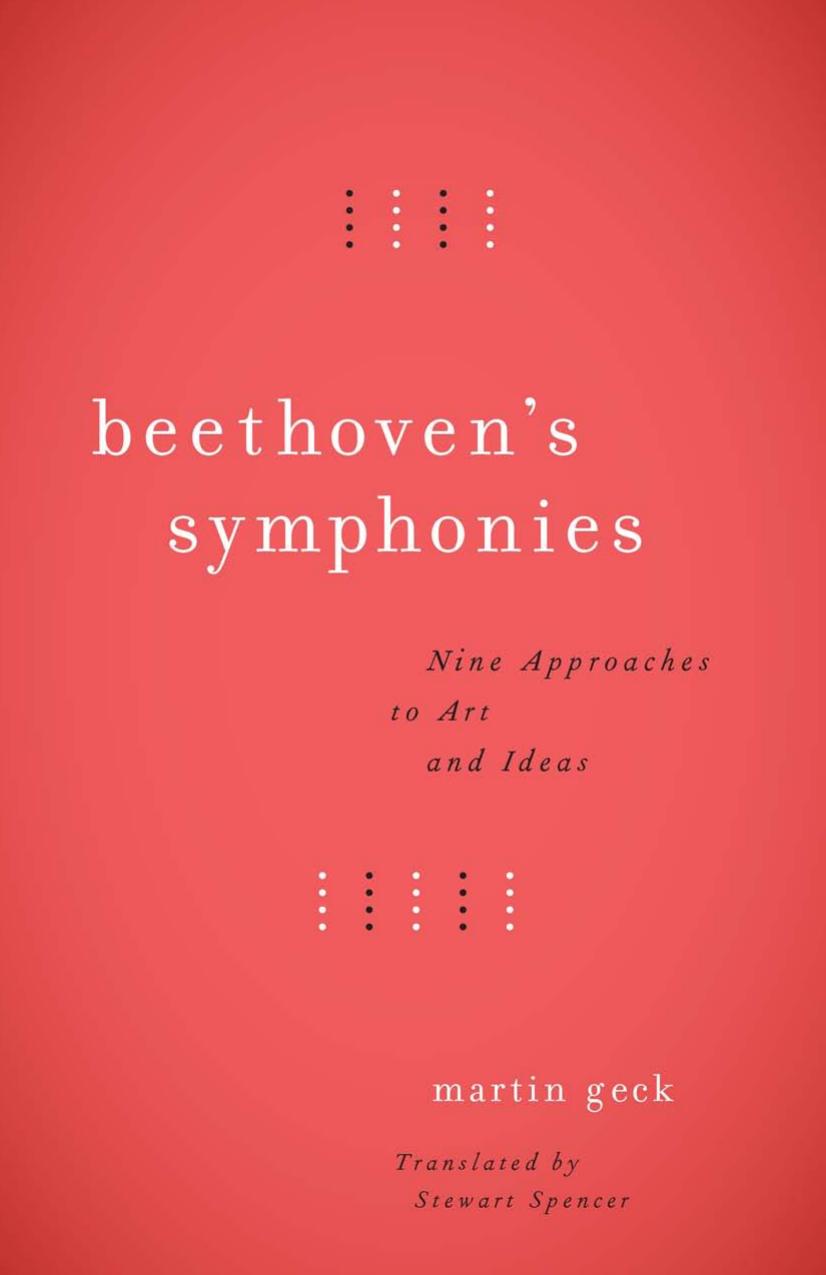
Author:Martin Geck [Geck, Martin]
Language: eng
Format: epub, pdf
ISBN: 9780226453910
Publisher: University of Chicago Press
Published: 2017-05-01T03:00:00+00:00
Symphony No. 6 in F Major, Op. 68 (Pastoral)
First performed at the Theater an der Wien in Vienna on December 22, 1808
“To keep the whole in view”:136 this comment by Beethoven is of particular significance in the context of his Fifth and Sixth Symphonies not least because he was working on both symphonies at the same time and because he introduced them to Viennese audiences at the same concert in 1808. But it is clear from various fundamental compositional decisions that the parallelism goes even further. Both opening movements are dominated by an exterritorial motto clearly marked off by fermatas from other motivic and thematic events, and the final movements of both symphonies are cast in the form of a hymn that emerges as if by compulsion from a transition that links the two movements. As if this were not enough, there is some evidence to suggest that the two works are intended to form a single whole in terms of the ideas that they convey: taken together, they express the meaning of human existence. We are dealing here with the human condition and with the existential entities of fate and nature.
Both sets of ideas are explicitly presented in the exterritorial mottos at the start of each symphony: in the Fifth in the form of the pounding motif, in the Sixth in the guise of the nature motif that is set apart by fermatas from the rest of the musical argument. There are several reasons why we are entitled to speak of a nature motif here. According to a long-standing musical tradition, the key of F major represents the pastoral world, an ideal picture of nature at peace with itself. This tradition begins with the thirteenth-century canon Sumer is icumen in and includes the Sinfonia from Bach’s Christmas Oratorio, Simon’s aria “The shepherd gathers now his flock” from Haydn’s oratorio The Seasons, and the “Scène aux champs” from Berlioz’s Symphonie fantastique. A nineteenth-century Swiss scientist even claimed that it was possible to hear the note F and, above it, the triad C–E–G in waterfalls and other Swiss lakes and rivers. He even referred explicitly to the opening motto of the Pastoral Symphony, in which the drone-like fifth, F–C, follows a C-major triad.137
Download
Beethoven's Symphonies: Nine Approaches to Art and Ideas by Martin Geck.pdf
This site does not store any files on its server. We only index and link to content provided by other sites. Please contact the content providers to delete copyright contents if any and email us, we'll remove relevant links or contents immediately.
The Goal (Off-Campus #4) by Elle Kennedy(13780)
Kathy Andrews Collection by Kathy Andrews(11969)
Diary of a Player by Brad Paisley(7647)
Assassin’s Fate by Robin Hobb(6295)
What Does This Button Do? by Bruce Dickinson(6262)
Big Little Lies by Liane Moriarty(5876)
Altered Sensations by David Pantalony(5155)
Pale Blue Dot by Carl Sagan(5080)
Sticky Fingers by Joe Hagan(4253)
The Death of the Heart by Elizabeth Bowen(3676)
The Heroin Diaries by Nikki Sixx(3609)
Confessions of a Video Vixen by Karrine Steffans(3351)
Beneath These Shadows by Meghan March(3341)
How Music Works by David Byrne(3327)
Computational Linguistics and Intelligent Text Processing: 20th International Conference, CICLing 2019 La Rochelle, France, April 7â13, 2019 Revised Selected Papers, Part I by Alexander Gelbukh(3245)
The Help by Kathryn Stockett(3188)
Jam by Jam (epub)(3153)
Harry Potter 4 - Harry Potter and The Goblet of Fire by J.K.Rowling(3132)
Strange Fascination: David Bowie: The Definitive Story by David Buckley(2910)
